*** Special Offer: For a £5 discount on Historic Houses membership use code STEW05 ***
Within the land-locked West Midlands Region at the heart of England there are eighteen exceptional heritage properties that are free-to-visit for members of Historic Houses. These range from magnificent stately homes to picturesque gardens and parkland.
The Lord Leycester
The West Midlands Region contains six county areas: Herefordshire bordering South Wales, Shropshire to its north, Staffordshire further to the east, Warwickshire down to the south and Worcestershire around to the west. And in the middle of this ring of traditional counties is the industrialised West Midlands county, centred on Birmingham and Coventry.
Opening times vary widely between the properties, with some only open for a few days a year. So it is important to check a property’s website before setting off to visit.
It should be noted that house opening days and times are often much less than for their surrounding gardens and parkland.
Herefordshire
Eastnor Castle
There are two free-to-visit properties in Herefordshire.
Eastnor Castle, the imposing 19th Century mock castle, with Pugin designed interiors, overlooks the Castle Lake. There is an impressive arboretum in the castle grounds where the alkaline soil of the Malvern Hills has promoted the unusual size and beauty of the trees.
Sufton Court on the other hand is a relatively small 18th Century Palladian mansion that is the seat of the Hereford family. The extensive parklands overlooking the Rivers Lugg and Wye were designed by Humphrey Repton.
Shropshire
Wollerton Old Hall Garden
The three free-to-visit properties in Shropshire only allow access to the gardens and parkland, but these are of exceptional quality.
Hodnet Hall Gardens comprise 60 acres of interlinked gardens developed in the 1920s and woodland walks. A key feature of the gardens are the seven interconnected pools with waterfalls and cascades.
Walcot Hall & Arboretum has 30 acres of grounds which include a large ornamental lake. However the main feature is the arboretum, which has a large and varied collection of specimen trees some of which date back to the early 1800s.
Staffordshire
Weston Park
All three free-to-visit properties in Staffordshire allow access to the halls as well as to the gardens and parkland.
Weston Park is a 17th Century country house built in Restoration style. It contains an important art collection which includes silverware, antiques and china. In addition to well maintained gardens, there are 1,000 acres of Capability Brown parkland. In 1998 Weston Park was the venue for the G8 summit which included Clinton and Yeltsin.
Chillington Hall is a Georgian country house dating back to 1725, with previous buildings on the site date back to the 12th Century. The parkland was designed in the 1770s by Capability Brown and includes a large lake and architectural follies.
Longner Hallwas built by John Nash in a Tudor Gothic style in 1803. The 170 acre parkland was landscaped by Humphrey Repton at the same time. The main rooms in the hall have ornate plaster fan vaulting and attractive medieval-style stained glass windows.
Warwickshire
Middleton Hall
Warwickshire is very well endowed with heritage properties having five that are free-to-visit for Historic Houses members. These include some of the most visually outstanding in the West Midlands Region.
Middleton Hall & Gardens may be a small property, but it has unique architectural features and its large walled garden and nature trails combine to provide a rewarding heritage experience. Medieval buildings co-exist with a Tudor house and the main Georgian building, giving a striking overall appearance.
Arbury Hall is a curious mixture of Tudor and 18th Century Gothic revival. The author George Eliot (Mary Anne Evans) was born on the estate and aspects of it feature in her books. Only the parkland with gardens, lakes and wooded walks are free to Historic Houses members with a small extra charge to visit the house.
Coughton Court
Coughton Court is a Tudor house dating back to 1409 and occupied by the Throckmorton family throughout this period. When I visited recently, I was surprised to be welcomed at the entrance to the house by the current Throckmorton owner. The property’s turbulent religious history is evidenced by two priest holes within one of the house towers and by two churches in the grounds, Anglican and Catholic. The 25 acre grounds include formal gardens, a lake and a river walk.
Stoneleigh Abbey is a strange mixture of a red sandstone Elizabethan/Jacobean house with a grey stone Baroque frontage. Jane Austen was a visitor, as was King Charles I and Queen Victoria. The grounds were designed by Humphry Repton in the early 1800s and feature pathways down to the River Avon. Only the grounds are free to Historic Houses members, with a small extra charge to visit the house.
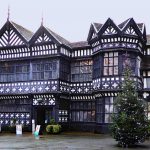
The Lord Leycester in the centre of Warwick, dates back to 1126, but with major additions over the centuries. It is considered one of the country’s most important medieval buildings. Since 1571 until the present it has acted as a refuge for ex-servicemen. The small but well maintained gardens were originally set aside by Robert Dudley in 1571.
Worcestershire
Hartlebury Castle
There are four free-to-visit properties in Worcestershire, which allow access to the houses as well as the gardens and parkland (except for Hagley Hall which charges extra for parkland visits).
Hartlebury Castle was the home to the Bishops of Worcester from 855 until 2007 and touring the castle gives an insight into the various bishops who resided there. Passing through the Great Hall in the castle leads to the Worcestershire County Museum. There is a short circular walk around the grounds with views back over the moat.
Hagley Hall was one of the last of the great Neo-Palladian houses and dates back to about 176o. However, it had to be much refurbished after a fire in 1925. The hall is set within 350 acres of landscaped deer park.
Harvington Hall
Harvington Hall is a medieval moated manor house, with the wide moat passing all the way around the house. It has seven priest holes, including one hidden by a swinging beam. The house tour includes the Brewhouse, the Great Chamber, the Large Chapel and the Small Chapel. Outside there is a moatside medicinal garden and an Elizabethan Knot & Herb garden.
Little Malvern Court dates back to a 15th Century Benedictine monastery, but after the Dissolution of the Monasteries in the mid 16th Century, it became a family home and is still occupied by descendants. Its monastic background is apparent when touring the house, as there are many religious artefacts on display. The 10 acres of parkland, at the foot of the Malvern Hills, has terraces and gardens leading down to the lakes.
West Midlands County
Winterbourne House & Garden is the only free-to-visit property in West Midlands County. It is situated in a quiet corner of Birmingham and is owned now by the University of Birmingham. Built by the Nettleford family in the 1900s, both the house and the 7 acre garden illustrate Edwardian life influenced by the Arts and Crafts movement. The attached parkland leads down to the Edgbaston Pool.
Entry to these properties can cost up to £15 or more.
However if you take up annual membership with Historic Houses, you will get free entry, plus free entry to 300 other heritage sites, including some of the top sites in the country, such as Hever Castle, Waddesdon Manor and Raby Castle.
Enter our unique code STEW05 at ‘Add discount code’ and new members will receive a £5 discount. This also applies if you wish to give annual membership as a gift.
POSTED 4th JULY 2026 by STEVE HANSON. The photographs were taken by BARBARA HANSON except for the second photograph in the article which was supplied by Eastnor Castle.


 • For a £5 discount on new membership, use code STEW05 on the Historic Houses website.
 • To get a £10 National Trust gift card with membership by direct debit, click on National Trust.
Free-to-visit Historic Houses in the West Midlands Region
*** Special Offer: For a £5 discount on Historic Houses membership use code STEW05 ***
Within the land-locked West Midlands Region at the heart of England there are eighteen exceptional heritage properties that are free-to-visit for members of Historic Houses. These range from magnificent stately homes to picturesque gardens and parkland.
The West Midlands Region contains six county areas: Herefordshire bordering South Wales, Shropshire to its north, Staffordshire further to the east, Warwickshire down to the south and Worcestershire around to the west. And in the middle of this ring of traditional counties is the industrialised West Midlands county, centred on Birmingham and Coventry.
Opening times vary widely between the properties, with some only open for a few days a year. So it is important to check a property’s website before setting off to visit.
It should be noted that house opening days and times are often much less than for their surrounding gardens and parkland.
Herefordshire
There are two free-to-visit properties in Herefordshire.
Eastnor Castle, the imposing 19th Century mock castle, with Pugin designed interiors, overlooks the Castle Lake. There is an impressive arboretum in the castle grounds where the alkaline soil of the Malvern Hills has promoted the unusual size and beauty of the trees.
Sufton Court on the other hand is a relatively small 18th Century Palladian mansion that is the seat of the Hereford family. The extensive parklands overlooking the Rivers Lugg and Wye were designed by Humphrey Repton.
Shropshire
The three free-to-visit properties in Shropshire only allow access to the gardens and parkland, but these are of exceptional quality.
Wollerton Old Hall Garden has several ‘rooms’, many with carefully shaped topiary framing the house and other garden features. It won the Historic Houses Smaller Garden of the Year competition in 2025.
Hodnet Hall Gardens comprise 60 acres of interlinked gardens developed in the 1920s and woodland walks. A key feature of the gardens are the seven interconnected pools with waterfalls and cascades.
Walcot Hall & Arboretum has 30 acres of grounds which include a large ornamental lake. However the main feature is the arboretum, which has a large and varied collection of specimen trees some of which date back to the early 1800s.
Staffordshire
All three free-to-visit properties in Staffordshire allow access to the halls as well as to the gardens and parkland.
Weston Park is a 17th Century country house built in Restoration style. It contains an important art collection which includes silverware, antiques and china. In addition to well maintained gardens, there are 1,000 acres of Capability Brown parkland. In 1998 Weston Park was the venue for the G8 summit which included Clinton and Yeltsin.
Chillington Hall is a Georgian country house dating back to 1725, with previous buildings on the site date back to the 12th Century. The parkland was designed in the 1770s by Capability Brown and includes a large lake and architectural follies.
Longner Hall was built by John Nash in a Tudor Gothic style in 1803. The 170 acre parkland was landscaped by Humphrey Repton at the same time. The main rooms in the hall have ornate plaster fan vaulting and attractive medieval-style stained glass windows.
Warwickshire
Warwickshire is very well endowed with heritage properties having five that are free-to-visit for Historic Houses members. These include some of the most visually outstanding in the West Midlands Region.
Middleton Hall & Gardens may be a small property, but it has unique architectural features and its large walled garden and nature trails combine to provide a rewarding heritage experience. Medieval buildings co-exist with a Tudor house and the main Georgian building, giving a striking overall appearance.
Arbury Hall is a curious mixture of Tudor and 18th Century Gothic revival. The author George Eliot (Mary Anne Evans) was born on the estate and aspects of it feature in her books. Only the parkland with gardens, lakes and wooded walks are free to Historic Houses members with a small extra charge to visit the house.
Coughton Court is a Tudor house dating back to 1409 and occupied by the Throckmorton family throughout this period. When I visited recently, I was surprised to be welcomed at the entrance to the house by the current Throckmorton owner. The property’s turbulent religious history is evidenced by two priest holes within one of the house towers and by two churches in the grounds, Anglican and Catholic. The 25 acre grounds include formal gardens, a lake and a river walk.
Stoneleigh Abbey is a strange mixture of a red sandstone Elizabethan/Jacobean house with a grey stone Baroque frontage. Jane Austen was a visitor, as was King Charles I and Queen Victoria. The grounds were designed by Humphry Repton in the early 1800s and feature pathways down to the River Avon. Only the grounds are free to Historic Houses members, with a small extra charge to visit the house.
The Lord Leycester in the centre of Warwick, dates back to 1126, but with major additions over the centuries. It is considered one of the country’s most important medieval buildings. Since 1571 until the present it has acted as a refuge for ex-servicemen. The small but well maintained gardens were originally set aside by Robert Dudley in 1571.
Worcestershire
There are four free-to-visit properties in Worcestershire, which allow access to the houses as well as the gardens and parkland (except for Hagley Hall which charges extra for parkland visits).
Hartlebury Castle was the home to the Bishops of Worcester from 855 until 2007 and touring the castle gives an insight into the various bishops who resided there. Passing through the Great Hall in the castle leads to the Worcestershire County Museum. There is a short circular walk around the grounds with views back over the moat.
Hagley Hall was one of the last of the great Neo-Palladian houses and dates back to about 176o. However, it had to be much refurbished after a fire in 1925. The hall is set within 350 acres of landscaped deer park.
Harvington Hall is a medieval moated manor house, with the wide moat passing all the way around the house. It has seven priest holes, including one hidden by a swinging beam. The house tour includes the Brewhouse, the Great Chamber, the Large Chapel and the Small Chapel. Outside there is a moatside medicinal garden and an Elizabethan Knot & Herb garden.
Little Malvern Court dates back to a 15th Century Benedictine monastery, but after the Dissolution of the Monasteries in the mid 16th Century, it became a family home and is still occupied by descendants. Its monastic background is apparent when touring the house, as there are many religious artefacts on display. The 10 acres of parkland, at the foot of the Malvern Hills, has terraces and gardens leading down to the lakes.
West Midlands County
Winterbourne House & Garden is the only free-to-visit property in West Midlands County. It is situated in a quiet corner of Birmingham and is owned now by the University of Birmingham. Built by the Nettleford family in the 1900s, both the house and the 7 acre garden illustrate Edwardian life influenced by the Arts and Crafts movement. The attached parkland leads down to the Edgbaston Pool.
Previous Articles
We have provided our own reports on several of the these properties. See: Weston Park, Middleton Hall & Gardens, Stoneleigh Abbey, The Lord Leycester and Winterbourne House & Gardens.
See also: Free-to-visit Historic Houses in Cheshire and Lancashire.
Entry to these properties can cost up to £15 or more.
However if you take up annual membership with Historic Houses, you will get free entry, plus free entry to 300 other heritage sites, including some of the top sites in the country, such as Hever Castle, Waddesdon Manor and Raby Castle.
Enter our unique code STEW05 at ‘Add discount code’ and new members will receive a £5 discount. This also applies if you wish to give annual membership as a gift.
We have reviewed several other properties under Historic Houses and see also Historic Houses versus National Trust – Which to join?
POSTED 4th JULY 2026 by STEVE HANSON. The photographs were taken by BARBARA HANSON except for the second photograph in the article which was supplied by Eastnor Castle.